Why this matters
Tarot is not fortune-telling. It is a structured way to surface what your unconscious already knows. Here is how tarot actually works, what each spread means, and how AI tarot readings compare to traditional methods.
What Tarot Actually Is (And Is Not)
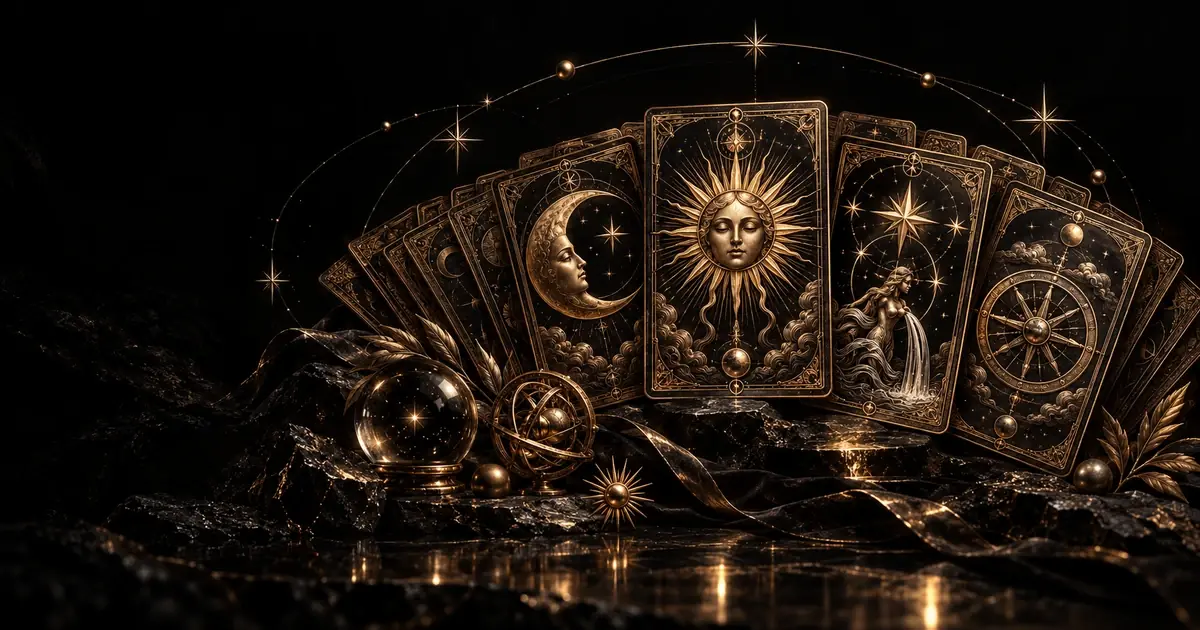
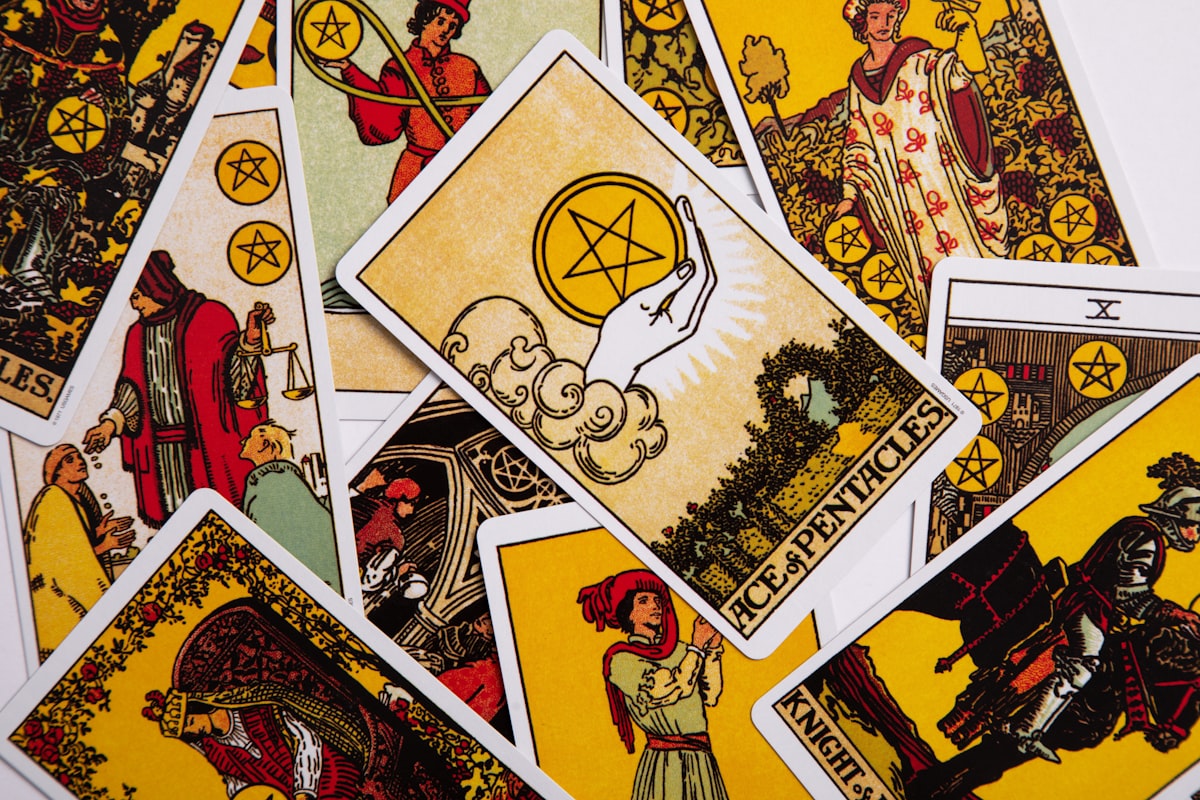
Tarot is a 78-card system dating to 15th-century Italy. The deck splits into two groups: 22 Major Arcana cards (The Fool through The World) representing major life themes, and 56 Minor Arcana cards divided into four suits (Cups, Pentacles, Swords, Wands) representing day-to-day situations.
Tarot is not: A prediction machine. A magic 8-ball. A way to see the fixed future.
Tarot is: A structured framework for self-reflection that uses archetypal imagery to surface patterns, blind spots, and possibilities your conscious mind might be avoiding.
Think of it as a mirror with symbols instead of your face.
The Major Arcana: The Big Story
The 22 Major Arcana cards trace a journey called "The Fool's Journey" — from innocence (The Fool, card 0) through experience and transformation to completion (The World, card 21).
When Major Arcana cards appear in a reading, they signal something bigger is at play — a life chapter, not a passing mood.
Key cards to understand:
- •The Fool (0) — New beginnings, leap of faith, innocence
- •The Magician (I) — Manifestation, willpower, resourcefulness
- •The High Priestess (II) — Intuition, the unconscious, hidden knowledge
- •The Empress (III) — Abundance, nurturing, sensuality
- •The Tower (XVI) — Sudden upheaval, revelation, necessary destruction
- •The Star (XVII) — Hope, healing, renewed purpose after crisis
- •The Moon (XVIII) — Illusion, fear, the shadow self
- •The World (XXI) — Completion, integration, achievement
The Four Suits: Everyday Energy
| Suit | Element | Domain | Energy |
|---|---|---|---|
| Cups | Water | Emotions, relationships, intuition | How you feel |
| Pentacles | Earth | Money, health, material security | What you have |
| Swords | Air | Thoughts, communication, conflict | What you think |
| Wands | Fire | Passion, creativity, ambition | What drives you |
Each suit runs from Ace (pure potential) through 10 (completion), plus four Court Cards: Page (student), Knight (action), Queen (mastery, inward), King (mastery, outward).
Reading about the cards is one thing. Pulling your own is another.
Get a personal AI tarot reading on the question that’s actually on your mind — free to start.
The Most Common Spreads
Three-Card Spread
Best for: Quick daily guidance, specific questions
Positions: Past — Present — Future (or Situation — Challenge — Advice)
The simplest and most versatile spread. Perfect for beginners.
Celtic Cross (10 Cards)
Best for: Complex life questions, deep dives
Positions: Present situation, crossing challenge, foundation, recent past, crown, near future, self-perception, environment, hopes/fears, outcome
The most popular spread in Western tarot for a reason — it covers every angle of a situation.
Past-Present-Future (5 Cards)
Best for: Understanding how a situation evolved and where it is heading
Positions: Distant past, recent past, present moment, near future, potential outcome
How to Get the Most From a Tarot Reading
1. Ask open-ended questions. "What should I know about my career right now?" works. "Will I get the job?" does not — it reduces the reading to a yes/no when the real value is in the nuance.
2. Note your emotional reaction. The cards that make you uncomfortable often hold the most important message. Resistance is signal.
3. Look for patterns over time. A single reading is a snapshot. Tracking your readings over weeks and months reveals recurring cards and themes — that is where the deep self-knowledge lives.
4. Look across your whole profile. When your tarot reading aligns with a pattern from your astrology chart or numerology profile, pay attention — on Omniscient Insight, all three live in one place, so that convergence is easy to spot instead of scattered across separate apps.
“These reading really are so on point. That I really wonder sometimes how it's possible to be so on point by just pulling a few cards.”
Anonymous
Tarot
Reading about the cards is one thing. Pulling your own is another.
Get a personal AI tarot reading on the question that’s actually on your mind — free to start.
Free account · no credit card needed
Compare subscription plansDid this answer what you came for?
One tap. No account needed, and we don’t collect anything about you.