Why this matters
A French researcher found Mars in the same two spots in the charts of 2,088 sports champions. Here is what the data showed, what the replications found, and what Mars, Sun and Saturn say about drive in your own chart.
In the 1950s, a French researcher went looking for astrology in the birth records of 2,088 sports champions — and found something he couldn't explain away. Mars kept turning up in the same two places in the sky.
Seventy years later, the argument about what that means still hasn't ended. Here's what the data actually said, what the skeptics found when they tried to repeat it, and what Mars, Sun and Saturn say about drive in your own chart.
The Story Behind the Data
Michel Gauquelin was a French psychologist and statistician who set out to test astrology properly — with large samples and published birth records rather than anecdotes. He expected to debunk it.
Working through the birth charts of 2,088 European sports champions born between 1794 and 1945, he found that an unusual number of them were born just after Mars had risen over the horizon, or just after it crossed the highest point in the sky.
That finding became known as the Mars Effect, and it is still the most argued-over claim in the history of statistical astrology.
What Gauquelin Actually Found
The whole controversy rests on a gap of a few percentage points:
- •Expected rate: in a random spread of births, roughly 17.1% of people should have Mars in those two "key sectors."
- •What he found: 21.6% of the champions — 452 out of 2,088.
- •The excess: about 4.5 percentage points, or roughly 1 extra champion in every 22.
That sounds tiny, and it is. But across a sample that size it is statistically significant — unlikely to be a fluke of the dice.
Two details matter more than the headline number:
- •The effect showed up only for the most eminent champions — Olympic medallists and record-holders, not working professional athletes.
- •It did not show up in the general population.
The Science vs. Astrology Debate
What supporters point to
- •Re-analyses by psychologist Hans Eysenck and researcher Suzanne Ertel found the pattern survived their own scrutiny, particularly at the top of the fame scale.
- •The effect appears to strengthen with eminence — the more celebrated the athlete, the more often Mars sits in a key sector. A bias-driven artifact would not usually behave that neatly.
- •Gauquelin reported the same shape of result for other professions — Moon for writers, Jupiter for actors, Saturn for scientists — which he framed as a wider "neo-astrological" pattern.
What critics point to
- •A large French replication published by the CFEPP (the French Committee for the Study of Paranormal Phenomena) tested over a thousand champions and found no effect.
- •A US test organised by skeptics in the late 1970s and early 80s likewise found no significant correlation in American sports champions.
- •The most serious charge is selection bias: that Gauquelin, choosing who counted as a "champion," may have unconsciously let Mars-sector births into the sample and kept others out.
Where that leaves it
As science, the Mars Effect is unproven and contested — a replication problem that never resolved in either direction. As astrology, it remains one of the very few claims that was ever put in front of large-scale statistical data at all.
Both of those things are true at once, and any honest article about it has to say so.
What This Means For Your Own Chart
Set the statistics aside for a moment. Astrologers were pointing at the same three planets for competitive drive long before anyone counted champions, and those placements are the interesting part of your chart whether or not Gauquelin was right.
| Planet | What it represents | Why it matters for physical drive |
|---|---|---|
| Mars | Energy, aggression, appetite for a fight | The engine — raw power and the willingness to compete |
| Sun | Vitality, will, confidence | The desire to be seen performing, and to win while being watched |
| Saturn | Discipline, endurance, structure | The training habit that turns talent into a career |
Mars — the engine
- •Aries, Leo or Sagittarius: explosive, courageous, fast off the mark.
- •Scorpio or Capricorn (rulership and exaltation): intensity, stamina, strategic aggression — the grinder rather than the sprinter.
- •1st, 5th or 10th house: physical presence, performance instinct, drive aimed at public achievement.
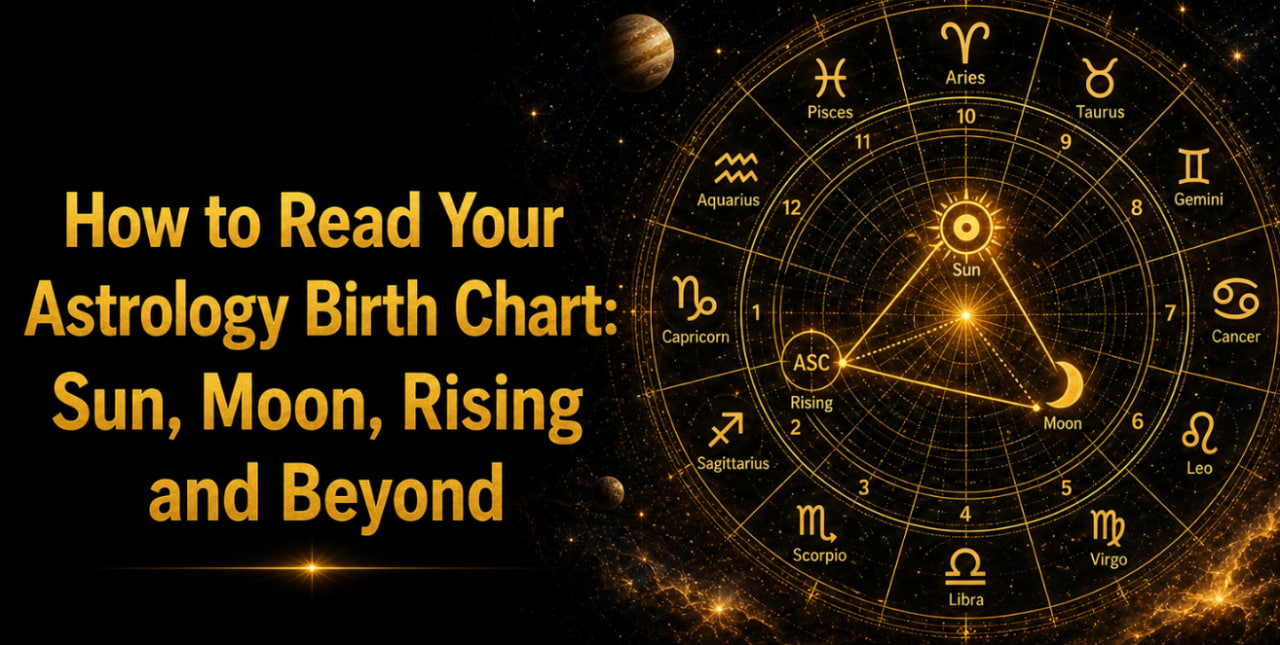
- •Close to the Ascendant or Midheaven: precisely the placement Gauquelin's key sectors describe.
Sun — the will
- •Aries, Leo, Sagittarius, Scorpio or Capricorn: strong will, competitive nature, resilience under pressure.
- •1st or 5th house: vitality expressed through the body and through performance.
Saturn — the discipline
- •Capricorn (its own sign): long-horizon planning and mental toughness.
- •6th or 10th house: work ethic, routine, and a tolerance for the boring part of getting good.
See where this pattern lands in your chart.
Create a free account to find your Rising sign and read your own birth chart in plain English.
Key Houses For Physical Drive
- •1st house — the body itself: vitality, physical presence, how you meet the world.
- •3rd house — short bursts of effort, nerve, sheer willingness to try.
- •5th house — play, performance, competition, self-expression.
- •6th house — training, daily routine, health, and opponents.
- •10th house — career, public recognition, the record you leave.
Powerful Combinations
Single placements say less than the way they connect:
- •Mars in aspect to Saturn — raw energy under discipline. The classic signature for sustained excellence rather than one good season.
- •Sun in aspect to Mars — competitive drive tied to identity; recognition earned through performance.
- •1st, 3rd, 6th and 10th houses interlinked — a chart built for effort, training, competition and career in one continuous line.
The Bottom Line
- 1.Gauquelin's data shows a small but statistically notable link between Mars's position and elite athletic achievement — for the most eminent champions only, not for athletes generally.
- 2.The replications disagree, and the selection-bias objection has never been fully answered. Treat it as an open question, not a proof.
- 3.Traditional astrology reached the same three planets — Mars, Sun, Saturn — by a completely different route, centuries earlier.
- 4.For your own chart, that trio plus the 1st, 3rd, 5th, 6th and 10th houses is where your competitive energy, your training discipline and your appetite for pressure actually show up.
Sources
- •Gauquelin, M. — L'influence des astres (1955) and Cosmic Influences on Human Behavior (1973). The original sports-champion samples and the key-sector method.
- •Eysenck, H. J. & Nias, D. — Astrology: Science or Superstition? (1982). Independent review of the Gauquelin data by a psychologist.
- •Ertel, S. — published re-analyses introducing the eminence scale, which is where the "stronger for more famous athletes" finding comes from.
- •Benski, C. et al. — The "Mars Effect": A French Test of Over 1,000 Sports Champions (CFEPP, 1996). The major replication that found no effect.
- •Kurtz, P., Zelen, M. & Abell, G. — the US test of the Mars Effect, published across several issues of The Skeptical Inquirer (1977–1983).
This article summarises historical research, astrological tradition and an unresolved scientific debate. It is written for education and self-reflection, not as a claim about what any chart can predict.
“These reading really are so on point. That I really wonder sometimes how it's possible to be so on point by just pulling a few cards.”
Anonymous
Tarot
See where this pattern lands in your chart.
Create a free account to find your Rising sign and read your own birth chart in plain English.
Free account · no credit card needed
Compare subscription plansDid this answer what you came for?
One tap. No account needed, and we don’t collect anything about you.