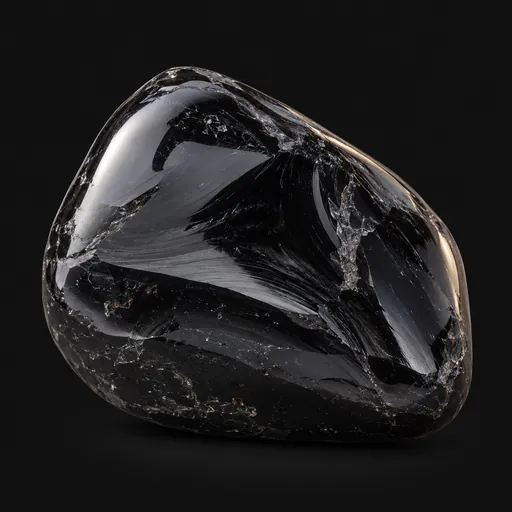
Obsidian is volcanic glass, not a quartz crystal. Its dark surface can make a striking, simple object for a desk or pocket. We use it here as a symbol of boundaries: the decisions you make about your own time and availability.
Try one sentence today: “I need to check before I can commit.” Keep that sentence beside the stone. Practise it before the next request arrives.
Glass formed by a volcano
The verified story is geological. The US Geological Survey explains that obsidian forms when silica-rich lava cools rapidly enough to prevent the usual crystal growth. Its glassy appearance records those conditions. USGS explanation
That origin is interesting on its own. It does not mean the stone absorbs harmful intentions or creates a protective field around its owner. A personal symbol can help you remember a boundary; the boundary still depends on your choices and, where needed, practical support.
What would a useful boundary look like?
The aim need not be to become less generous. It might be to make promises you can actually keep. Before agreeing, ask what the request involves, when it is needed and whether you have room.
You can use obsidian as a cue for a short end-of-day review. Write one commitment that felt right and one you want to handle differently. Then prepare the exact words you could use next time.
For a work desk, let the stone mark a stopping point. When you finish the day's last task, place it on the closed notebook. This is an original routine you can adapt, not an inherited ritual.
If the word “protection” attracts you, make it concrete. What needs protecting: your lunch break, an evening with your partner, or time to rest? A useful object should point you toward that answer.
Choose polished comfort over dramatic claims
For handling, look for a smooth tumble with no sharp edges. Rough volcanic glass can cut; a chipped piece should be kept out of a pocket and away from children. Ask for the actual dimensions so a close-up image does not mislead you about size.
Black glass can have different origins, and an image cannot establish authenticity. Choose a seller who identifies the material clearly and gives a straightforward return policy. A claim about powerful energy is not a substitute for a material description.
Use a soft cloth for routine cleaning, protect the surface from scratches and avoid impacts or sudden temperature changes. Ask for individual advice if the piece has a coating, setting or unusual finish.
Black Tourmaline has a different texture and mineral identity. Smoky Quartz may appeal if you prefer a translucent brown.
Choose a smooth obsidian you would enjoy keeping close. Let its role be simple: a pause before the next yes, and room to choose your answer.
Ready to go deeper?
Did this answer your question?
Sources and calculation
Imported from the 58 stone article drafts. Planned daily release at 16:00 UTC; requires factual and editorial review before publication. Care and historical sources remain linked in the article. No invented legends or testimonials. Cover image and affiliate links require final setup.