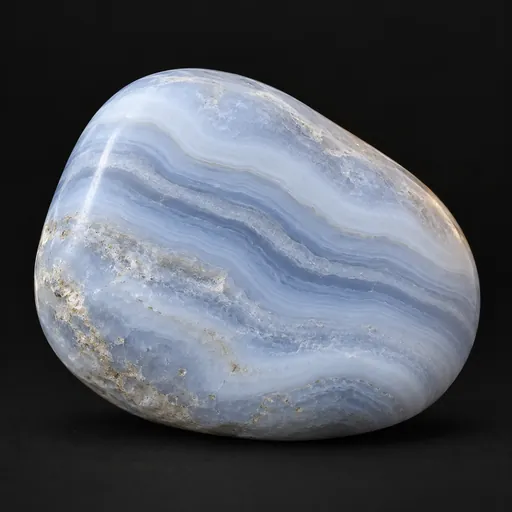
Agate is a chalcedony material, and “blue agate” is a broad description rather than one tightly defined variety. Some blue agates are colour-enhanced. Ask the seller what gives the individual piece its appearance. GIA’s treatment discussion
For this guide, a chosen blue agate can mark a pause before responding.
Try this: draft the reply, leave it briefly and read it once for the request you want the other person to understand.
The pattern has a material history
Agate can form in layers as silica is deposited, producing visible bands. Different pieces can show very different patterns. Agate reference
A polished surface can reveal those lines beautifully. It can also reveal colour that has been enhanced. Treatment does not need to be hidden, and an appealing dyed piece should be sold with that description.
This broad label does not establish a particular historical use. Choose a personal association that you can explain rather than assuming every blue agate carries the same old tradition.
Give the pause a purpose
If you hope for a clearer conversation, decide what you want from your reply. Is it a question, an explanation or a boundary?
Place the stone beside the draft and choose one job for the message. Remove anything that distracts from it. You can then decide whether to send, revise or talk directly.
For a short desk routine, use the stone as a cue to finish one message before opening another. For a gift, include a note that explains why you liked the pattern or chose the colour.
You may worry about choosing a “wrong” stone for this use. The practice works through the decision you make about it. You can try it with an object you already own before buying a particular piece.
Choose with the description open
Ask whether the colour is natural or dyed, whether the stone is coated, and whether you will receive the pictured item. A pale natural-looking tone does not itself prove untreated status.
Check the size and finish. A smooth tumble is practical for handling; a polished slice may show banding better but need a stand.
Use a soft cloth while treatment is uncertain. Avoid solvents, prolonged soaking and harsh cleaners. Ask for a method suitable for the dye, coating and setting before using water or equipment.
If the lace-like pattern is what attracts you, read Blue Lace Agate. Compare Sodalite for a different blue material.
Choose a blue agate you like with a treatment description you understand. Place it where you write your replies and give it one clear purpose: pause, identify the point and choose your words.
Ready to go deeper?
Did this answer your question?
Sources and calculation
Imported from the 58 stone article drafts. Planned daily release at 16:00 UTC; requires factual and editorial review before publication. Care and historical sources remain linked in the article. No invented legends or testimonials. Cover image and affiliate links require final setup.