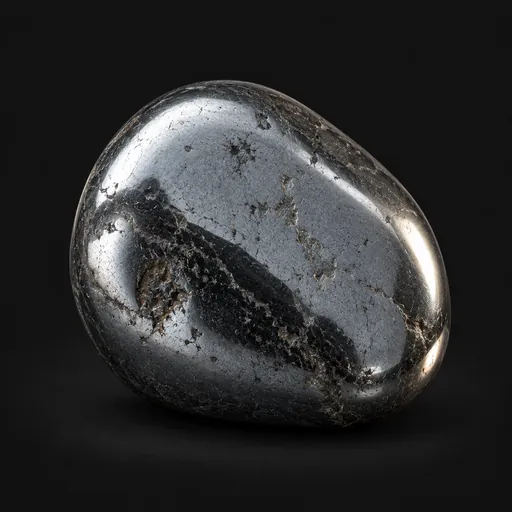
Hematite is an iron oxide that can have a metallic grey appearance. A small polished piece feels visually simple beside a busy notebook. In this guide, it serves as a personal symbol of returning to the practical.
Try a two-column list: write “In my control” and “Outside my control.” Choose one action from the first column that you could take today.
A grey surface with a red clue
Hematite has a notable contrast: specimens can look steel-grey, while its streak is red to reddish brown. Geologists use streak—the colour of a mineral's powder—as an identification clue. You do not need to scratch your jewellery to appreciate that fact. Material reference
Appearance and identity are different questions. A shiny dark bead does not establish its composition on its own.
Natural hematite and products sold as magnetic “hematite” should not be treated as interchangeable without checking the material.
Return to the next physical action
If you want to feel less scattered, make your action observable. Put three papers in the right folder. Send one request for information. Set out what you need for tomorrow.
Place the stone beside the chosen task. When you finish, move it beside the next one or put it away. The movement is an original routine, not a mineral effect.
For a short reflection, notice the stone's surface, shape and weight, then return to the room and the task. You can use any familiar object for this. Choose hematite if you enjoy its particular look and feel.
You may worry that a ritual will distract you from action. Give it a short limit. A useful reminder brings you back to the thing you intended to do.
Check what the seller means by hematite
Ask for material identification, especially where a product is advertised as strongly magnetic. Read the description rather than relying on a name printed on a bracelet card.
Inspect the finish and fastening. A bracelet you cannot wear comfortably will be a poor daily cue, however attractive its photographs. A single tumble may suit a desk routine better.
For routine care, use a soft dry cloth. Avoid prolonged soaking, saltwater and abrasive cleaners, particularly when material identity or coatings are uncertain. Store it to prevent knocks against fragile pieces.
Compare Smoky Quartz for a translucent dark option or Black Tourmaline for a crystal specimen.
Choose a hematite piece you would enjoy handling and can identify clearly. Keep its job small: help you find one action within your control, then let you get on with it.
Ready to go deeper?
Did this answer your question?
Sources and calculation
Imported from the 58 stone article drafts. Planned daily release at 16:00 UTC; requires factual and editorial review before publication. Care and historical sources remain linked in the article. No invented legends or testimonials. Cover image and affiliate links require final setup.