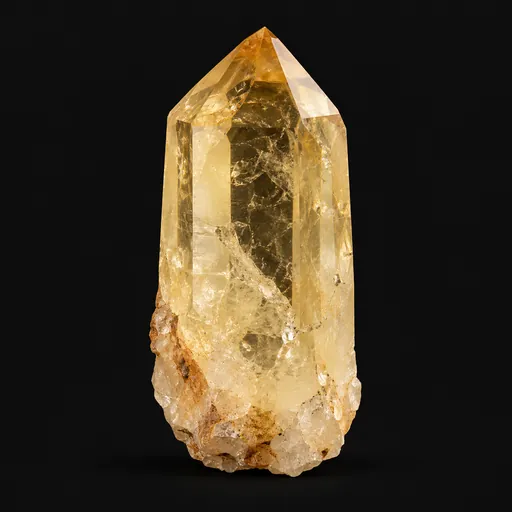
Citrine is the yellow-to-orange variety of quartz. It can be pale and subtle or richly coloured. Here, its meaning is personal: a reminder to turn an opportunity into an action. Owning it does not guarantee success or income. GIA’s material description
Begin with one question: what opportunity could you follow up today? Write the person's name, the message or the next step. Put your citrine beside that note until you have acted.
The real story is in the colour
There is an interesting change behind much of the citrine sold today. GIA explains that naturally yellow quartz is uncommon, and much commercial citrine comes from heating amethyst. A purple quartz can become yellow or orange through treatment.
This is a material history, not a spiritual transformation story. Heat-treated citrine is not automatically an imitation. What matters is that the seller tells you what it is, how it has been treated and what you are paying for. Treatment explanation
An expensive label such as “natural abundance stone” should not replace that information. You can enjoy the colour without accepting a promise about what it will bring you.
Give optimism a practical task
If you want more progress, choose one measurable action rather than a larger wish. Keep the stone beside a short weekly list containing only three priorities. At the start of each day, select one and decide when to begin.
You could also use it during a spending review. Write down something you want, its cost and what matters most about it. A stone used in a money ritual should encourage a decision you can afford, not become a reason to overspend.
For a gift, include the meaning you intend: “I chose this to mark the project you are starting.” That is warmer and more honest than promising the recipient good fortune.
What is worth paying for?
Look for a colour you enjoy in ordinary light, a shape that suits its purpose and clear treatment disclosure. A small polished stone can serve a desk ritual; a faceted piece may suit jewellery. Neither needs to be large to carry meaning.
Ask whether you are buying naturally coloured quartz, treated quartz or an imitation. Do not use a photograph’s colour saturation as proof. If a seller claims a specific origin or untreated status at a premium, ask what supports it.
For routine care, protect the piece from impacts and prolonged heat. GIA recommends warm, soapy water for citrine; unusual treatments or a jewellery setting can change the care requirements. Care guide
Explore Carnelian for orange-red colour or Yellow Sapphire for a different mineral and buying decision.
Choose the citrine whose colour makes you want to keep it in view. Give it one place and one purpose. The next step on your note is what turns the intention into progress.
Ready to go deeper?
Did this answer your question?
Sources and calculation
Imported from the 58 stone article drafts. Planned daily release at 16:00 UTC; requires factual and editorial review before publication. Care and historical sources remain linked in the article. No invented legends or testimonials. Cover image and affiliate links require final setup.