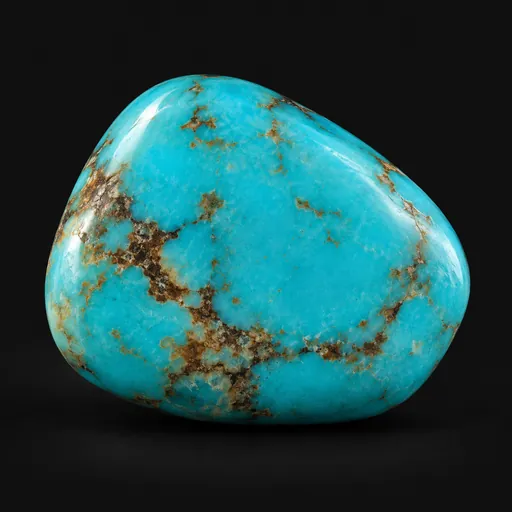
Turquoise is an opaque blue-to-green gem material. Its texture, matrix and finish can vary. This guide treats it as an object of personal connection, while leaving specific cultural meanings to the people and sources that can explain them.
Start with a question: what do you want to remember when you wear it? A person, a journey, a promise or simply a colour you love can be enough.
Water, minerals and a striking colour
GIA describes turquoise forming through reactions involving copper-bearing groundwater and other minerals. Its blue and green tones have a material history, and its porous structure affects how it wears. GIA’s description
Turquoise has also been used by many makers in different places. That does not give every turquoise product the same cultural origin. A generic shop label cannot establish that a piece was made by a particular community or artist.
If craftsmanship matters to you, ask the maker's name and what can be documented. You may find the real account of a specific piece more interesting than an anonymous “ancient protection” claim.
Choose a connection you can explain
When you want a stone to feel meaningful, make the association concrete. Before a conversation with someone important, wear the piece as a cue to ask one question and listen to the answer.
For a journal practice, write a place or person you want to stay connected with, then choose an action: call, visit, write or learn. The jewellery can remind you; it cannot maintain the connection by itself.
If it is a gift, match the recipient's style rather than assuming everyone likes bold blue. Include the maker information where available and your own reason for choosing it.
You may worry about buying a convincing imitation or paying for a story the seller cannot support. Those are useful questions to raise before purchasing.
Ask what the material has been through
Find out whether the piece is natural turquoise, stabilised, dyed, reconstructed or an imitation. Ask what “natural” means in that seller's description. Treatment can affect price and care, and should be disclosed.
Look at the actual piece and confirm its size. Matrix patterns can be attractive; they are not, by themselves, proof of a particular mine or authenticity.
GIA permits warm, soapy cleaning for turquoise but advises against steam and ultrasonic cleaners. Heat, solvents and treatments require care. Avoid perfume, harsh cleaners and prolonged soaking; get tailored advice for the setting. Care guidance
Compare Chrysocolla if you like blue-green colour, or Amazonite for a different material.
Choose turquoise with a clear material description and a maker or seller you can question. Let the real colour, workmanship and personal connection carry the appeal.
Ready to go deeper?
Did this answer your question?
Sources and calculation
Imported from the 58 stone article drafts. Planned daily release at 16:00 UTC; requires factual and editorial review before publication. Care and historical sources remain linked in the article. No invented legends or testimonials. Cover image and affiliate links require final setup.