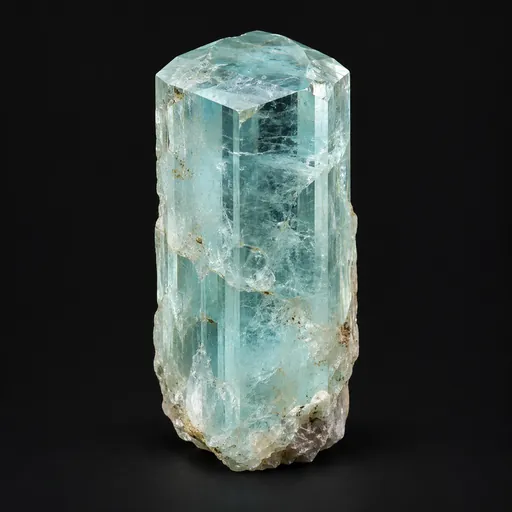
Aquamarine is blue-to-greenish-blue beryl. Its colour can be very pale, making a clear, quiet piece of jewellery or a specimen with room for light. We use it here as a personal symbol of clear expression.
Before the conversation: write “What I would like to ask is…” Finish the sentence with one request the other person can understand.
A sea-linked name and a real work of art
GIA traces the name aquamarine to Latin words for water and the sea. It also features the Dom Pedro aquamarine obelisk, cut by gem sculptor Bernd Munsteiner and held by the Smithsonian. A gemstone can be shaped to make light and form part of the experience. GIA’s history page
The sea connection begins with the name and colour; it does not establish protection from real hazards.
If the colour means a sense of space to you, you can use that meaning in an ordinary routine.
Prepare, rather than perfect
You may hope to feel understood, yet worry about saying the wrong thing. Keep the task narrow: prepare a message that says what happened and what you want next.
Write the request first. Then add only the context needed to understand it. Reading it aloud can help you notice sentences that are doing too much.
If you own aquamarine, set it beside the draft as a cue to pause before sending. You can also wear a pendant as a private reminder to ask a follow-up question instead of guessing. These are original exercises, not historical practices.
For a gift, the personal message could celebrate someone finding their voice or beginning a new role. Let the stone mark something real rather than promise a different personality.
Choose colour you enjoy outside the studio
Look at the gem in more than one light. Very pale aquamarine can be beautiful; deeper colour is not a requirement for a meaningful piece. Decide whether your aim is a specimen to admire or jewellery to wear.
Ask about natural or laboratory-grown identity, treatments and the setting. For an expensive piece, independent documentation may be worthwhile. A close-up illustration cannot authenticate a merchant's stock.
Use gentle hand cleaning and protect the piece from knocks. Aquamarine can contain fractures or be treated, so confirm suitability before using machinery or chemicals. A soft cloth is a useful starting point if the details are unknown. GIA’s care guide
Compare Lapis Lazuli for an opaque deep blue or Blue Lace Agate for a softer pattern.
Choose an aquamarine you would enjoy wearing or seeing while you prepare. Then return to the sentence: what would you like to ask? The stone can mark the moment you decide to say it clearly.
Ready to go deeper?
Did this answer your question?
Sources and calculation
Imported from the 58 stone article drafts. Planned daily release at 16:00 UTC; requires factual and editorial review before publication. Care and historical sources remain linked in the article. No invented legends or testimonials. Cover image and affiliate links require final setup.